

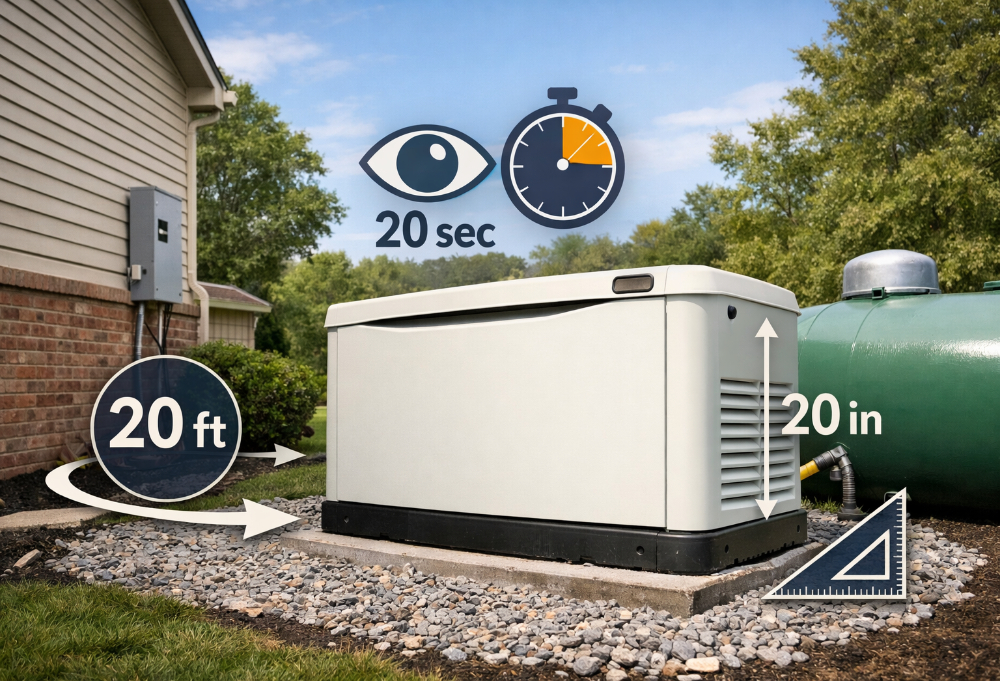
When it comes to installing a standby generator, safety should be your top priority. The 20-20-20 rule for generator installations is a critical guideline that every homeowner and business owner should understand before placing a generator on their property. This rule establishes three essential measurements that ensure your generator operates safely, efficiently, and without creating hazards for your household or neighbors.
Understanding the 20-20-20 Rule Basics
The 20-20-20 rule for generator installations refers to three different distance requirements that must be maintained around your standby generator. The first “20” represents 20 feet, which is the minimum distance your generator exhaust must be from any windows, doors, or ventilation systems of your home or neighboring buildings. The second “20” also represents 20 feet, which is the distance required from any gas meters, propane tanks, or other fuel sources. The third “20” represents 20 feet as well, which is the minimum distance your generator must maintain from property lines.
Understanding generator installation safety means recognizing that these measurements are not suggestions or guidelines that can be adjusted based on convenience. They are based on engineering standards and safety protocols developed by industry experts and regulatory bodies. The 20-20-20 rule protects you, your family, and your neighbors from carbon monoxide poisoning, fuel leaks, and potential fire hazards.
The Environmental Protection Agency and manufacturers of portable and standby generators recommend adhering to these distances to prevent dangerous situations. Many areas now require compliance with these standards as part of local building codes and regulations. Before you begin planning your generator installation, check with your local building department to understand any additional requirements specific to your region.
Exhaust Placement and Carbon Monoxide Safety
The first measurement in the 20-20-20 rule generator standard pertains specifically to exhaust placement. Your generator produces carbon monoxide, which is an odorless, colorless, and deadly gas. Placing your exhaust outlet less than 20 feet away from windows, doors, or air conditioning units creates a serious health risk for anyone inside the building.
Carbon monoxide can seep into your home through these openings, especially when your generator is running during an outage or as a backup power source. Symptoms of carbon monoxide poisoning include headaches, dizziness, weakness, nausea, and confusion. In severe cases, it can lead to loss of consciousness or death. Children, elderly individuals, and people with cardiovascular conditions are particularly vulnerable to carbon monoxide exposure.
When planning your generator installation safety measures, position the exhaust outlet to point downward and away from any structures. Many experts recommend pointing the exhaust away from the direction of prevailing winds in your area. This prevents carbon monoxide and other exhaust fumes from drifting back toward windows and doors during operation.
Testing your home’s carbon monoxide levels before and after generator installation is a smart precaution. You can purchase inexpensive carbon monoxide detectors for your home and install them in bedrooms, living areas, and near your fuel sources. These devices will alert you if carbon monoxide levels become dangerous, providing an additional layer of safety.
Fuel Source Separation Requirements
The second component of the 20-20-20 rule for generator installations addresses fuel source separation. Your generator must be at least 20 feet away from propane tanks, natural gas meters, gasoline storage containers, and any other combustible fuel sources on your property. This distance requirement exists because generators produce high temperatures and can create sparks or ignition sources.
If your generator malfunctions or operates improperly, it could potentially ignite nearby fuel sources. A fuel leak combined with the heat generated by a running generator could result in an explosion or fire. The 20-foot separation distance gives you a safety buffer zone that significantly reduces the risk of catastrophic failure.
When selecting the location for your standby generator placement, measure the exact distance to your propane tank and gas meter before finalizing your decision. If your property is small or irregularly shaped, you may need to install your generator on a different side of your home or in a location that takes up more space than you initially planned.
Keep this fuel separation requirement in mind even after installation is complete. Do not store gasoline, propane, or other fuels near your generator, as this creates a hazard every time you refuel or maintain your equipment. Create a clear zone around your generator that remains free of flammable materials and combustible substances.
Property Line and Neighbor Considerations
The third “20” in the 20-20-20 rule generator standard refers to property line distance. Your generator must be at least 20 feet away from your property line, which means your neighbor’s property must start at least 20 feet from your generator’s location. This requirement protects your neighbors from noise pollution, exhaust exposure, and potential hazards if your generator experiences problems.
Generator noise can be significant, especially during extended outages when the unit runs for hours. A properly installed generator that maintains the 20-foot property line distance will have less impact on your neighbors’ quality of life. Sound travels differently depending on terrain, vegetation, and obstacles, so this distance helps minimize noise disruption.
Additionally, if your generator were to leak fuel or develop other problems, the 20-foot buffer zone prevents hazardous materials from crossing onto your neighbor’s property. This protects you legally, as you would not want to be liable for damages caused by your generator affecting neighboring homes or businesses.
Before installing your standby generator placement, talk to your neighbors about your plans. They may have additional concerns beyond the basic safety requirements. Building good relationships with neighbors before installation helps prevent disputes and ensures everyone understands the purpose and safety measures of your generator.
Local Codes, Permits, and Professional Installation
Generator installation safety regulations vary significantly depending on your location. Some municipalities have stricter requirements than the basic 20-20-20 rule, while others may have additional regulations regarding setback distances, screening, or noise levels. Before purchasing and installing your generator, contact your local building department or code enforcement office.
Many jurisdictions require a permit before generator installation can begin. Obtaining a permit typically involves submitting detailed plans showing your generator’s location and measurements confirming compliance with local codes. An inspector will verify that your installation meets all requirements before authorizing use.
Hiring a licensed electrician or generator installation professional is highly recommended. These professionals understand local codes and can ensure your installation meets all safety and regulatory requirements. They can also identify potential hazards on your specific property that might not be obvious to an untrained person.
A professional installer will verify that your standby generator placement maintains proper distances from fuel sources, utilities, property lines, and exhaust intake areas. They will also ensure your generator is properly grounded, that backup power connections are safe, and that all mechanical and electrical components are functioning correctly.
Testing and Maintenance for Ongoing Safety
Installing your generator correctly is just the first step. Ongoing testing and maintenance ensure that your generator continues to operate safely and reliably. Monthly load tests help identify problems before they become dangerous, and regular maintenance prevents fuel degradation and mechanical failures.
Keep detailed records of all maintenance and testing. This documentation provides evidence that you have been responsible in maintaining your generator and following safety protocols. It also helps you track patterns that might indicate emerging problems.
Schedule professional service at least once annually. A technician can inspect all components, check fuel quality, verify electrical connections, and ensure your generator still meets all safety standards. They can also confirm that your exhaust discharge remains at least 20 feet from windows and doors, as landscaping changes or home modifications might affect this distance over time.
Conclusion
The 20-20-20 rule for generator installations is a straightforward but essential safety guideline that protects your home, family, and neighbors. By maintaining 20 feet of distance from windows and doors, fuel sources, and property lines, you significantly reduce the risks associated with generator operation. Always check local building codes, obtain necessary permits, and consider hiring professionals to ensure your standby generator placement complies with all safety requirements and operates reliably for years to come.
Need Reliable Plumbers Near You?
At Pro Plumbing, we’re committed to delivering reliable, efficient, and expert plumbing solutions you can count on every time. Whether you’re dealing with an emergency, planning a new installation, or looking to enhance your home’s comfort and safety, our team is here to help 24/7. Don’t wait until small issues become big problems—reach out to us today and let our experienced professionals take care of all your plumbing needs with the quality and care you deserve.